Super Bowl Symbolism & Its Lessons for First-Generation Students
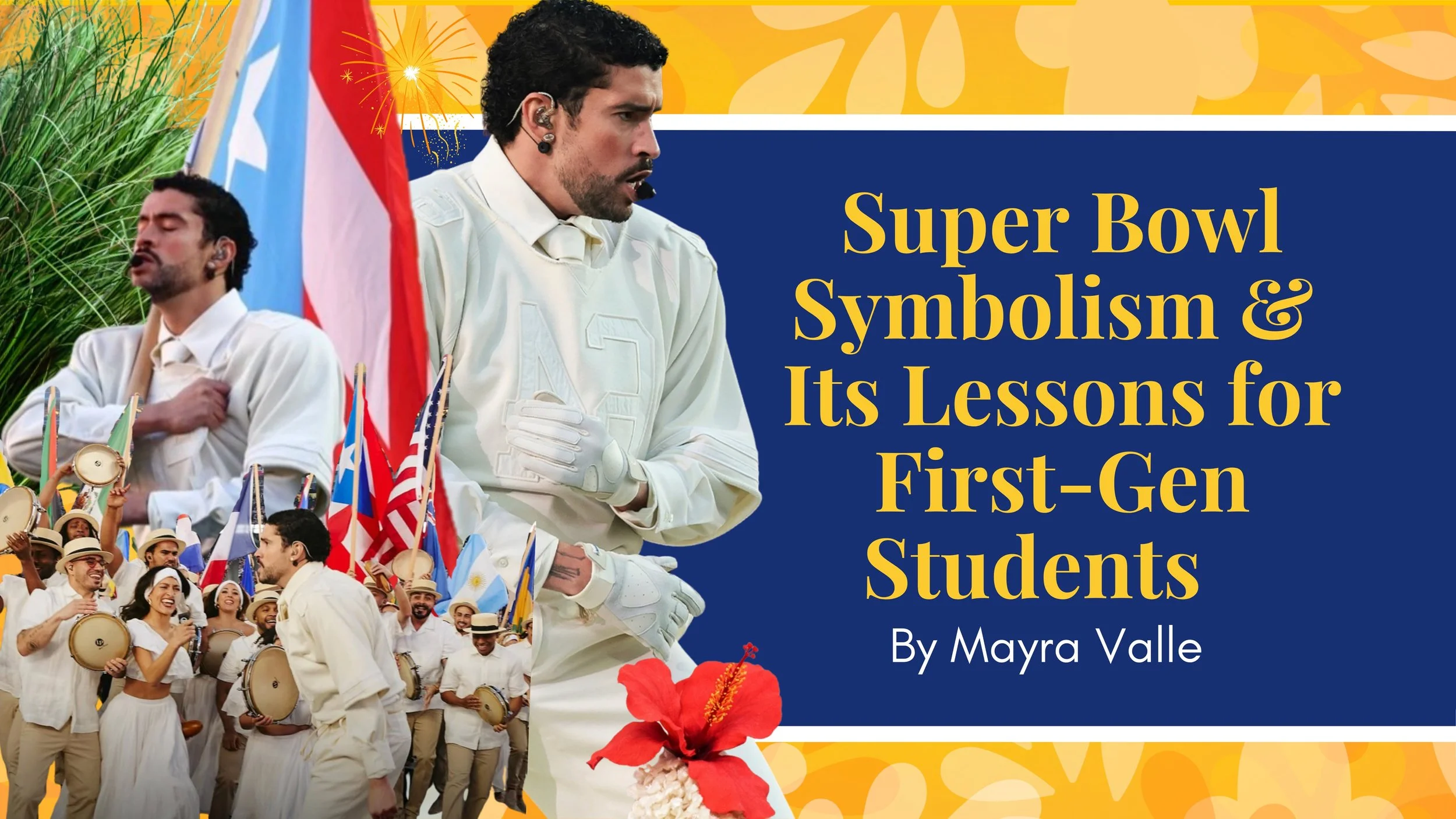
Photos by NFL Footage of Super Bowl
Leading up to the NFL halftime show, America’s political divide was on full display as conversations swirled around the “Benito Bowl.” To some, Benito represented a revival of the American Dream, a long-standing myth brought back to life. To others, he symbolized the unraveling of a fleeting American identity. The more I read, the clearer it became that Bad Bunny embodied the same tensions many first-generation students experience while navigating spaces of power: isolation, being underestimated, and the quiet fear that comes with challenging the norm simply by existing.
Bad Bunny brought Puerto Rican history, cultura, and joy to the global stage in his 13-minute performance. Nothing was accidental, which made me wonder: what lessons could Bad Bunny offer first-generation students? Plenty.
What’s in a Name? Everything!
Before he utters a single word, Bad Bunny introduces himself not as a persona, but as Benito Antonio Martínez Ocasio, his full birth name, displayed prominently in the credits. Behind him, sugarcane fields and jíbaros, rural Puerto Rican laborers and countrymen long understood as cultural and psychological symbols of Puerto Rican identity, fill the screen after the phrase “qué rico es ser Latino.”
He celebrates Latinidad while evoking a complex history shaped by exploitation and resilience.
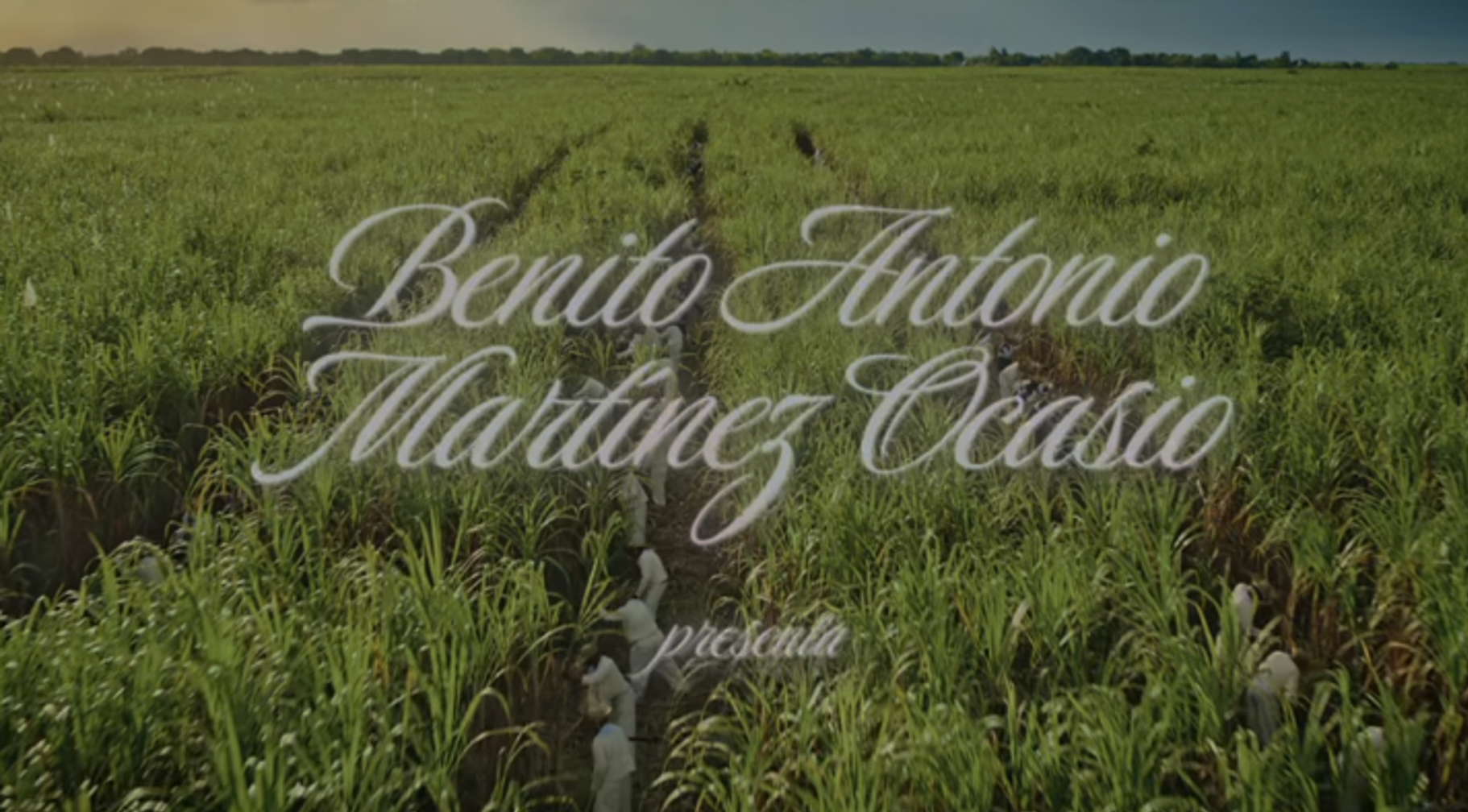
Lesson: Even when your name is unfamiliar, culturally grounded, or difficult for others to pronounce, say it anyway. Your name carries meaning, even if your voice shakes.
You Rise by Bringing Your Community with You
As Benito moves through the set, we see domino games, nail salons, taco carts, jewelers, and neighborhood businesses, communal archetypes many of us grew up with. He even shares a moment with Toñita, owner of the Caribbean Social Club in Brooklyn, a space long threatened by gentrification.
Rather than distancing himself from his roots, Bad Bunny elevates them. He transforms behaviors often dismissed as harmful stereotypes into dignified cultural rituals.
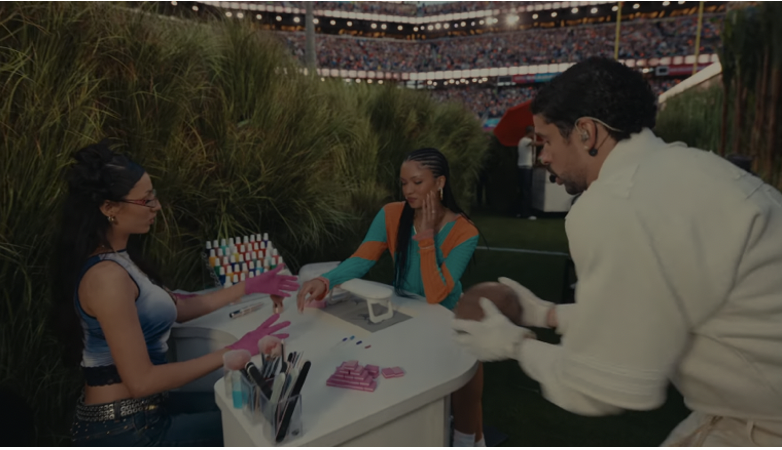
Lesson: Cultural literacy is your superpower! Community teaches connection, creativity, advocacy, strategy, and adaptability, which are skills that make you an agile learner in college classrooms.
Create Safe Spaces for Others
This lesson may feel controversial, but “Yo Perreo Sola [I dance alone]” became an anthem for a reason. In the song, Bad Bunny explicitly calls out expectations around consent on the dance floor and beyond. The chorus declares, “Te llama si te necesita, pero por ahora está solita; ella perrea sola [She’ll call you, if she needs you. But, she dances alone. She dances alone.]”
Reggaeton is often hypersexualized, yet even within that context, Bad Bunny centers autonomy and consent. As a man with power in clubs and society, he created an all-women dance ensemble that can exist confidently, safely, and without interruption.
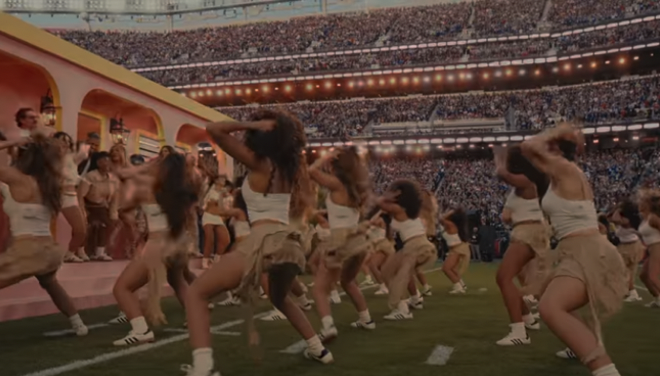
Lesson: When you hold social, academic, or positional power, use it to protect the dignity and safety of marginalized communities, in classrooms, on weekends, and across college campuses.
Acculturation Honors, Not Extracts
Acculturation offers a framework for cultural exchange rooted in mutual respect rather than extraction. As she pays tribute to newlyweds, Lady Gaga appears in “something blue,” a shade that echoes the Puerto Rican flag’s original light blue. As an Italian-American white woman and cultural outsider, she modified her pop song into a salsa arrangement to honor the community she has entered. She does not assimilate or appropriate.
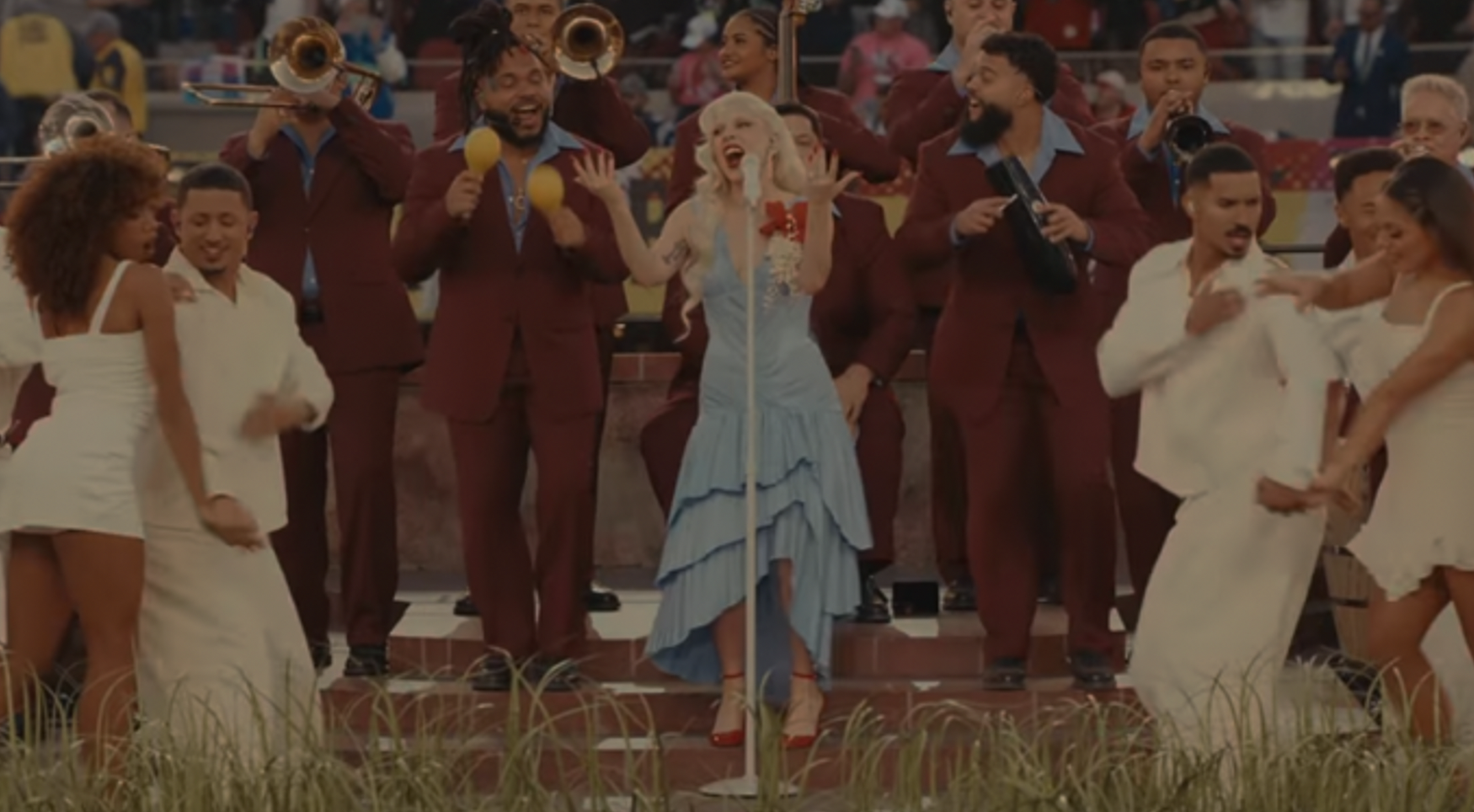
Puerto Rico’s history of colonialism and imperialism makes this distinction especially meaningful and invites a necessary question: what if outsiders engaged with culture through care and reciprocity rather than consumption?
Later, Ricky Martin’s rendition of “Lo Que le Pasó a Hawai’i [What Happened in Hawai‘i]” highlights shared histories between Puerto Rico and Hawaii. Ricky Martin, while a cultural insider, shows intra-cultural acculturation, as he draws connections between two communities fighting for sovereignty, displacement, and neo-colonialism.
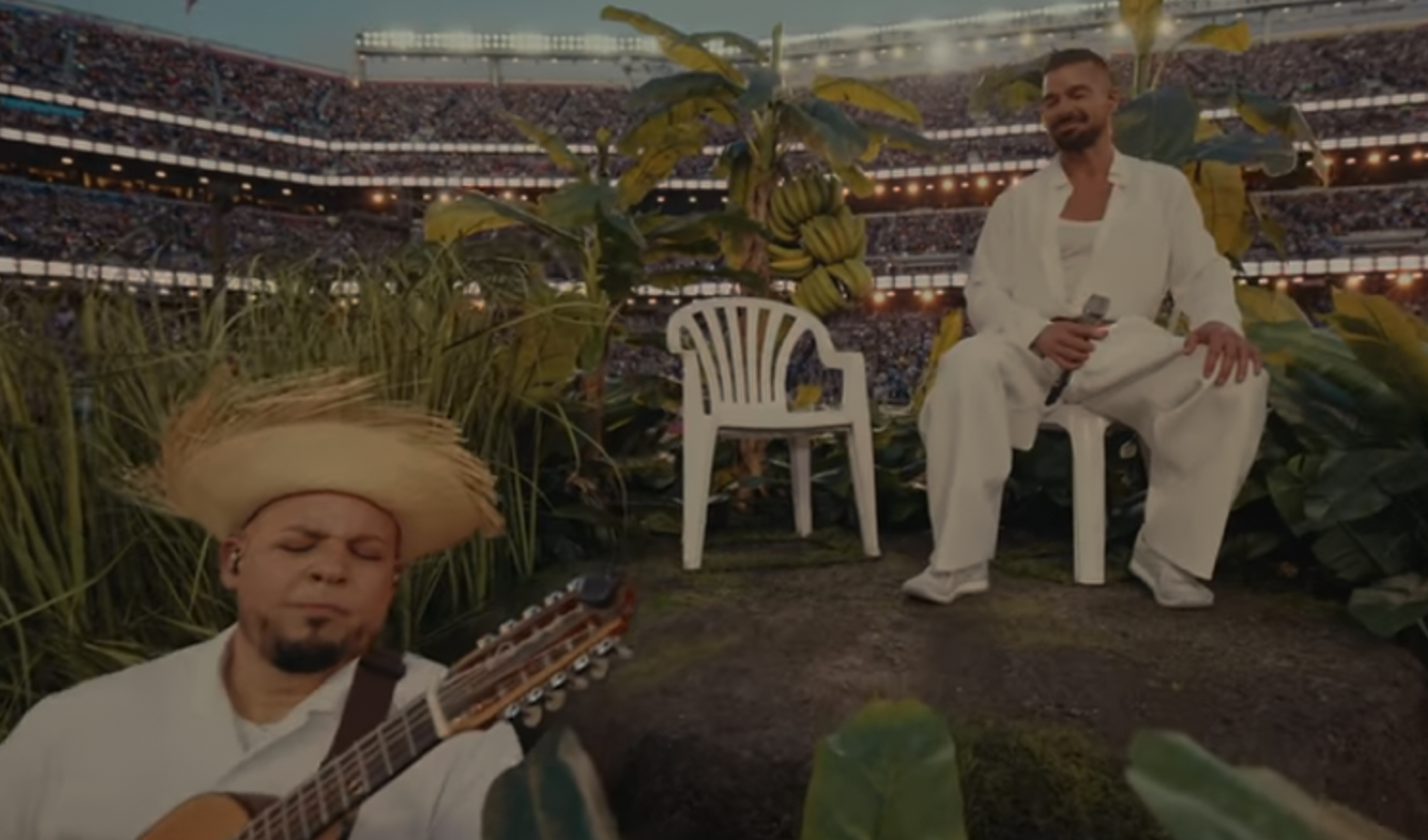
Lesson: First-generation students, your identity is a bridge. Listen, learn, adapt, and honor the spaces around you. When you don’t leave your experiences behind, you transform classrooms into spaces of belonging.
When the Status Quo Serves No One
As jíbaros climb electrical posts, the drums of “El Apagón [The Blackout]” begin. In 1948, La Ley de la Mordaza made it illegal to display Puerto Rico’s original light blue flag, a law designed to suppress dissent. Bad Bunny raises that flag to reclaim a symbol of sovereignty, while lyrics reference ongoing power outages across the island.
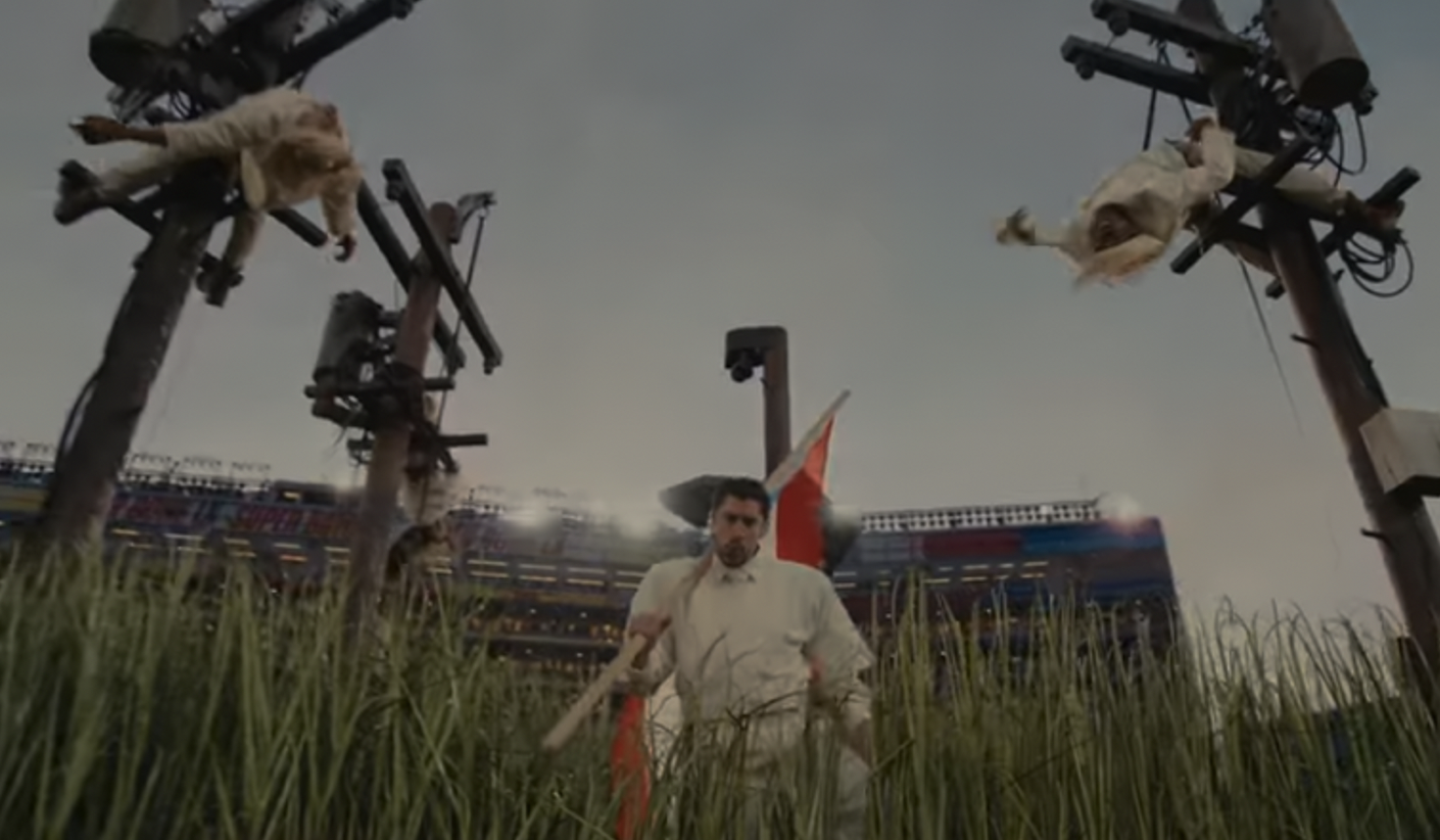
Today, Puerto Rico’s power system is largely privatized, and its infrastructure remains outdated. After Hurricane Maria, the island remained without power for over six months. Residents continue to face frequent blackouts as energy bills rise by more than 40%. In his depiction, jíbaros represent local efforts to restore what governments neglected.
Lesson: Advocate for the topics you care about. Add nuance to conversations that may not capture the full picture. Diverse perspectives foster critical thinking and meaningful discourse in classrooms.
Do It for Your Inner Child!
Bad Bunny looks directly into the camera and says, “si hoy estoy aquí… es porque nunca, nunca dejé de creer en mí. [If I’m here today, it’s because I never stopped believing in myself.]” Later, he hands a Grammy to a younger version of himself and says, “Siempre cree en ti. [Always believe in yourself.]”
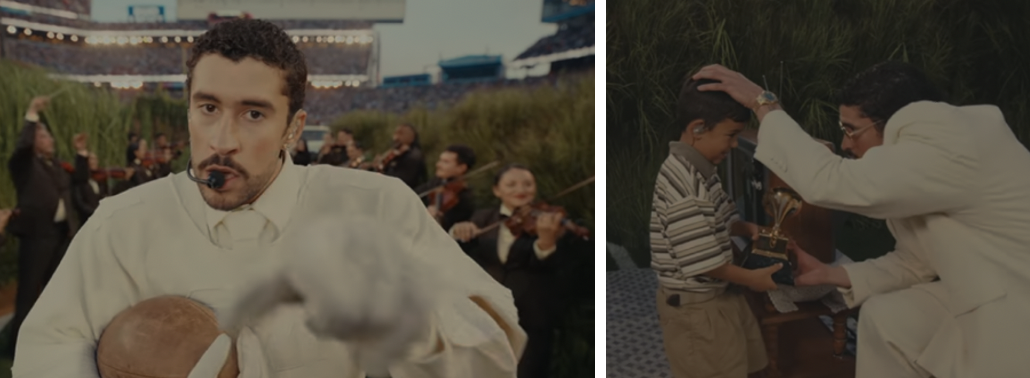
This message is for every young person who sees their obstacles before their potential. Bad Bunny has shared that he once worked as a grocery store bagger; within a decade, he became a global icon.
Lesson: Believe in your abilities today. Your path to success may look different, but run your race grounded in integrity and self-belief.
When You Succeed, Leave the Door Open for Others
As the performance closes, Bad Bunny says, “God Bless America,” the only English words spoken, before naming all 22 countries in the Americas as a message appears: “The only thing more powerful than hate is love.”
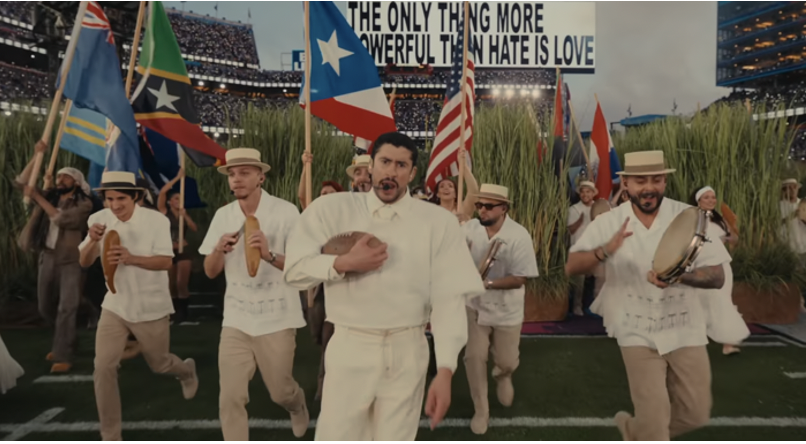
Lesson: Use your voice to uplift others, share credit, advocate for peers, and speak up when perspectives are missing in classrooms.
Natural Versus Industrial
While many halftime shows lean into technological spectacle, Bad Bunny highlights nature’s beauty with wooden posts, sugarcane fields, and blooming flowers, reminding us to stay connected to organic life to ground who we are.
Metaphorically, also takes a stance that even in high-pressure, high-tech environments, he chooses the natural world.
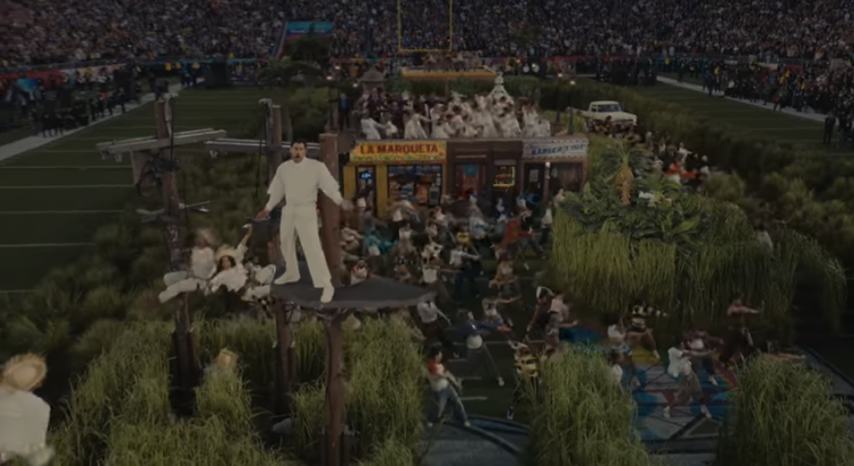
Lesson: Stay grounded. Walk outside. Touch grass. Nurture your connection to the living world, especially during stressful seasons like midterms and finals. Also, in a world of artificial and superficial appearances, be real!
Bad Bunny’s performance was a masterclass in cultural pride. At a time when communities are being targeted and dehumanized, he showed us what it looks like to arrive first without leaving essential parts of ourselves behind.
Further Reading:
Coto, Dánica. “Puerto Rico Hears Proposal on Power Bill Increases as Customers Fume.” AP News, 2 Dec. 2025.
Garcia, Sandra E. How Toñita, a Brooklyn Icon Joined Bad Bunny at the Super Bowl. 9 Feb. 2026.
Graulau, Bianca. “Why There Are Still so Many Outages in Puerto Rico.” Accessed 10 May 2023.
Lopez, K.C. “Ley de La Mordaza: The Law That Made the Puerto Rican Flag Illegal.” PBS39 WLVT, 16 Sept. 2019.
Lu, Denise, and Chris Alcantara. “Analysis | after Hurricane Maria, Puerto Rico was in the Dark for 181 Days, 6 Hours, and 45 Minutes.” Washington Post, 4 Apr. 2018.
NFL. “Bad Bunny’s Apple Music Super Bowl Halftime Show.” YouTube, 8 Feb. 2026.
Pedreira, Antonio S. La actualidad del jíbaro. Universidad de Puerto Rico, 1935.